

The landscape of modern football has been dramatically reshaped by astronomical transfer fees, with each passing window shattering previous records. When Declan Rice made his monumental move to Arsenal for a staggering £105 million, it didn’t just break the club’s transfer record—it cemented his place in an elite group of players who represent the pinnacle of football’s financial evolution. This blockbuster transfer, widely covered by Six6s and other leading football analysts, has sparked intense debate about value, performance, and the shifting dynamics of the global transfer market.
The Anatomy of a Record-Breaking Transfer
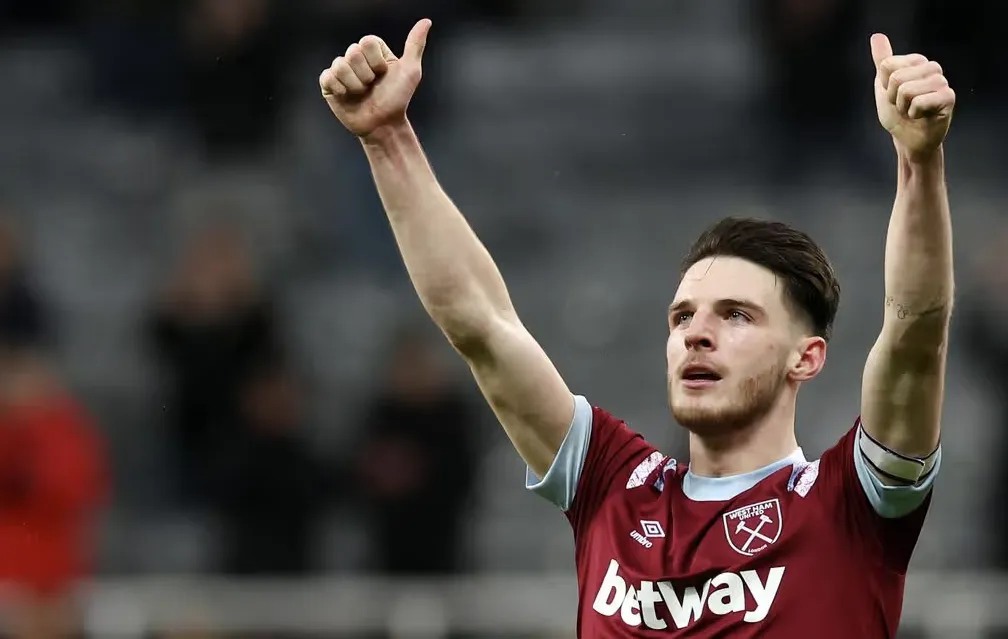
Declan Rice’s journey from West Ham United’s academy to becoming the most expensive English player in history is a testament to his extraordinary development and the changing economics of football. The transfer, completed in the summer of 2023, saw Arsenal pay a British record fee that included an initial £100 million plus £5 million in add-ons. This wasn’t just a purchase—it was a statement of intent from Mikel Arteta’s project at the Emirates Stadium.

Why Rice Commanded Such a Premium Price
Several factors converged to make Rice one of football’s most valuable assets:
- Proven Premier League Quality: Rice had already established himself as one of the league’s finest defensive midfielders over six seasons with West Ham
- Leadership and Experience: At just 24, he had captained West Ham, led them to Europa Conference League glory, and become England’s first-choice midfielder
- Positional Scarcity: Elite defensive midfielders with Rice’s combination of defensive solidity and ball-progression ability are incredibly rare
- Homegrown Premium: English players consistently command higher fees due to league regulations and market dynamics
- Age and Potential: Rice’s age meant Arsenal weren’t just buying a finished product but investing in a player with his best years ahead
Why Rice Commanded Such a Premium Price
Constructing Football’s Most Expensive XI
Rice’s inclusion in the all-time most expensive XI highlights how transfer fees have skyrocketed across all positions. Let’s break down this extraordinary lineup that represents over £1.2 billion in combined transfer fees.
The Goalkeeper: Kepa Arrizabalaga (£71.6 million)
When Chelsea triggered Kepa’s release clause in 2018, they set a world record for a goalkeeper that still stands today. The Spanish shot-stopper’s transfer from Athletic Bilbao was meant to solve Chelsea’s goalkeeping issues for a decade, though his inconsistent performances have made this signing one of the most debated in Premier League history.
The Defensive Line
Virgil van Dijk (£75 million) – Liverpool’s 2018 signing from Southampton transformed not just their defense but their entire identity under Jurgen Klopp. Van Dijk brought leadership, aerial dominance, and composure that made Liverpool Champions League and Premier League winners.
Harry Maguire (£80 million) – Manchester United’s 2019 world-record signing for a defender represented the club’s desperate search for defensive stability. While Maguire has faced significant criticism, his early performances under Ole Gunnar Solskjaer showed why United invested such a substantial fee.
Josko Gvardiol (£77 million) – Manchester City’s 2023 acquisition of the Croatian defender from RB Leipzig highlighted Pep Guardiola’s willingness to invest heavily in young defensive talent. Gvardiol’s versatility across the back line made him an ideal fit for City’s system.
Wesley Fofana (£70 million) – Chelsea’s pursuit of the French defender in 2022 demonstrated how highly clubs value young, ball-playing center-backs who can operate in high-pressing systems.
The Midfield Engine Room
Declan Rice (£105 million) – The cornerstone of this XI, Rice’s transfer to Arsenal represents the modern defensive midfielder’s value. His ability to break up play, carry the ball forward, and read the game makes him the complete package for contemporary football.
Enzo Fernandez (£106.8 million) – Chelsea’s January 2023 signing of the Argentine World Cup winner triggered his release clause at Benfica. Fernandez’s passing range, energy, and tactical intelligence made him one of the most sought-after midfielders in world football.
Jude Bellingham (£88.5 million) – Real Madrid’s acquisition of the English teenager from Borussia Dortmund in 2023 has already proven to be exceptional value. Bellingham’s explosive arrival at the Bernabeu, scoring goals and dominating midfield battles, has justified every penny of his fee.
The Attacking Trio
Neymar (£200 million) – Paris Saint-Germain’s 2017 signing of the Brazilian superstar from Barcelona remains the most expensive transfer in football history. Neymar’s dribbling, creativity, and commercial value made him a once-in-a-generation talent.
Kylian Mbappe (£165 million) – Moving from Monaco to PSG in 2018, Mbappe’s fee reflected his status as football’s most exciting young talent. His electric pace, clinical finishing, and World Cup triumph at age 19 made this transfer inevitable.
Antoine Griezmann (£107 million) – Barcelona’s 2019 signing of the French World Cup winner from Atletico Madrid showcased how elite strikers command extraordinary fees. Griezmann’s movement, link-up play, and goalscoring ability made him one of Europe’s most complete forwards.
Comparing Historical and Modern Transfer Values
To truly understand the significance of Rice’s transfer, we must contextualize it within football’s historical framework. The evolution of transfer fees has been nothing short of staggering.
The Inflation Factor Over Two Decades
When Alan Shearer moved to Newcastle for £15 million in 1996, it was a world record. Adjusted for football’s specific inflation—driven by television rights, commercial revenues, and global interest—that fee would exceed £100 million in today’s market. Similarly, Zinedine Zidane’s £46 million transfer to Real Madrid in 2001 would now be valued at over £160 million.
What Makes a Player Worth £100 Million?
Expert Analysis from Dr. James Richardson, Sports Economist at the University of Manchester:
“The £100 million barrier has become a psychological threshold in modern football. Clubs aren’t just paying for current ability; they’re investing in brand value, marketing potential, and future sell-on value. When you consider that Declan Rice at 24 has 10-12 years of top-level football ahead, Arsenal‘s investment makes logical sense despite the enormous outlay.”
Declan Rice’s Impact at Arsenal: A Statistical Deep Dive
Since joining Arsenal, Rice has transformed the Gunners’ midfield dynamics in ways that extend far beyond basic statistics.
Key Performance Metrics
Defensive Dominance: Rice averages 2.4 tackles and 1.8 interceptions per 90 minutes in the Premier League, placing him among the top 10% of midfielders in Europe’s top five leagues. His positional awareness and reading of the game have given Arsenal‘s defense an extra layer of protection.
Ball Progression: Perhaps most impressively, Rice ranks in the 95th percentile among midfielders for progressive carries and passes. His ability to drive forward with the ball, bypassing opponents and creating numerical advantages, has added a new dimension to Arsenal’s build-up play.
Leadership Immersion: Beyond statistics, Rice’s vocal presence and organizational skills have been crucial. Mikel Arteta has frequently praised how Rice communicates defensive positions, organizes pressing triggers, and maintains team structure during matches.
The Tactical Evolution Under Arteta
With Rice in midfield, Arsenal have evolved their approach:
- More Direct Transitions: Rice’s ability to win the ball and immediately launch counter-attacks has made Arsenal more dangerous on the break
- Defensive Security: His presence allows Arsenal’s full-backs to push higher, knowing Rice can cover counter-attacks
- Set-Piece Threat: Rice’s aerial ability has made Arsenal more dangerous from dead-ball situations
The Future of Record Transfers
What Lies Ahead for the Transfer Market?
As football’s revenues continue to grow, driven by expanding global audiences and new broadcasting deals, transfer fees will likely continue their upward trajectory. Sports marketing expert Sarah Chen, who has worked with multiple Premier League clubs, offers her perspective:
“The next £200 million transfer isn’t a matter of ‘if’ but ‘when’. Young players like Jude Bellingham or Kylian Mbappe have shown that clubs will pay extraordinary sums for generational talent. The key question is whether these astronomical fees represent market efficiency or irrational exuberance.”
Factors Driving Future Record-Fees
- New Broadcasting Rights: Premier League’s next domestic rights deal, expected to exceed £10 billion, will inject even more money into the system
- Middle East Investment: Continued interest from Saudi Arabian and Qatari investors has created new competition for top talent
- Player Development Models: Elite academies are producing more technically proficient players, increasing the supply of high-value assets
- Global Brand Expansion: Players with significant commercial appeal, particularly from emerging markets like Asia and North America, command even higher fees
The Risk and Reward Equation
Six6s‘s football analysis team has identified several factors that determine whether record transfers succeed or fail:
Success Factors
- System Fit: Players who join teams with clear tactical systems tend to adapt faster
- Manager Relationship: Strong player-manager chemistry is crucial for unlocking a player’s full potential
- Support Structure: Clubs with robust medical, sports science, and mental support systems help maximize investments
- Cultural Adaptation: Players who embrace local culture and league demands typically perform better
Warning Signs
- Pressure of Price Tag: Excessive transfer fees can create unrealistic expectations
- Injury History: Players with significant injury records represent higher risk
- Age Factor: Transfers for players over 27 carry less resale value and shorter peak periods
- Agent Influence: Complex ownership or agent structures can complicate a player’s focus
Conclusion: Declan Rice’s Transfer and the New Era of Football Economics
Declan Rice’s £105 million transfer to Arsenal represents more than just a single player’s value—it symbolizes football’s transformation into a global entertainment industry where elite talent commands extraordinary prices. His inclusion in football’s most expensive XI alongside legends like Neymar, Mbappe, and Van Dijk demonstrates how the sport’s financial landscape has been completely reimagined.
For Arsenal fans, Rice’s arrival represents hope—the hope that substantial investment combined with astute management can return the club to the summit of English and European football. Early returns suggest that Rice’s influence extends beyond his transfer fee, with his performances justifying the faith shown by Arteta and the Arsenal hierarchy.
As football continues to evolve, with broadcast revenues soaring and global fanbases expanding, we can expect transfer records to fall regularly. The question isn’t whether Declan Rice’s fee will be surpassed—it’s which young talent will next capture the imagination of football’s wealthiest clubs.
What are your thoughts on record-breaking transfers? Do you believe the £100 million+ era brings value to clubs, or has the market become unsustainable? Share your perspective in the comments below, and don’t forget to explore more in-depth football analysis and transfer coverage across our website.
