
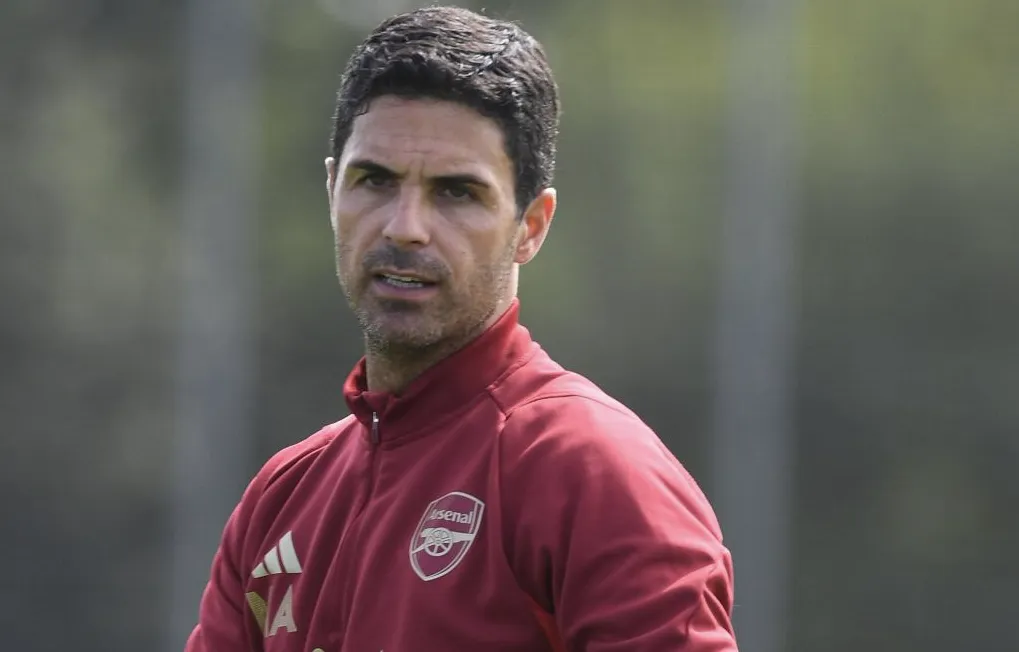
In the ever-evolving landscape of Premier League football, tactical innovation often separates the good from the great. Few matches in recent memory have demonstrated this more vividly than Arsenal’s recent encounter with Manchester City, where manager Mikel Arteta deployed a staggering 43 different formations throughout the game. This wasn’t just a football match; it was a live laboratory of tactical experimentation that left fans and pundits alike scrambling to understand the genius—or perhaps the madness—behind the approach.
“What we witnessed was unprecedented in modern Premier League football,” remarked former England international and football analyst Gary Neville during his post-match analysis. “This wasn’t just about switching between a back four and a back five. We’re talking about fundamental structural changes happening every few minutes, sometimes even within the same phase of play.”
The Genesis of a Tactical Revolution
Why 43 Formations?
The question on everyone’s mind is simple: why would any manager employ that many different formations in a single game? According to tactical analysts at Six6s, the answer lies in the unique challenge posed by Pep Guardiola’s Manchester City.
“City’s positional play is designed to exploit any static structure,” explained Dr. James Rodriguez, a football tactics professor at the University of Manchester. “Arteta, having worked under Guardiola, understood that a predictable formation would be systematically dismantled. His solution was radical: become unpredictably dynamic.”
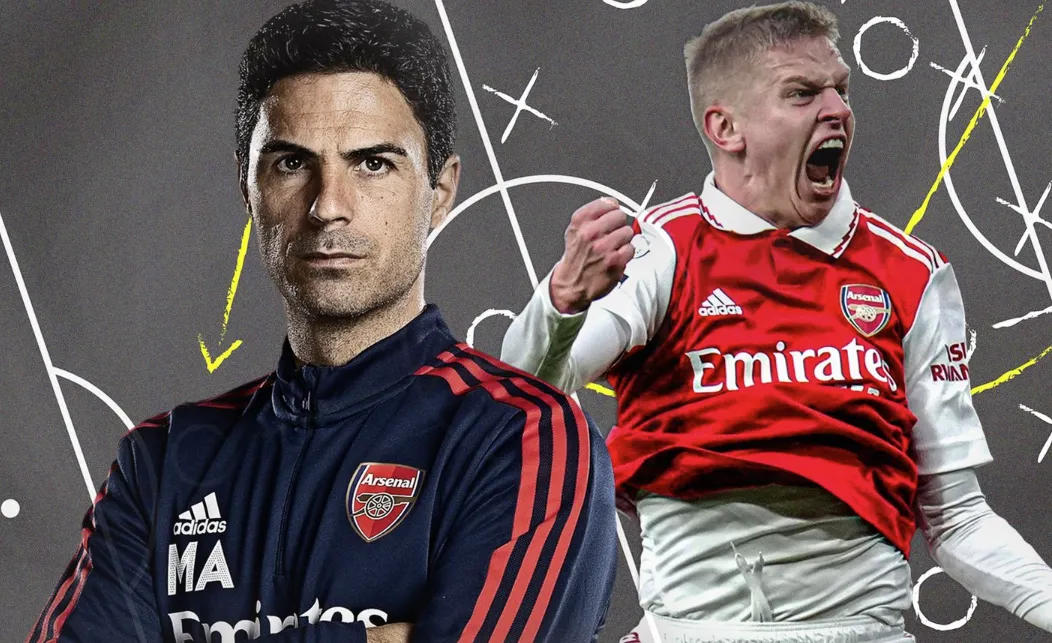
The formations ranged from traditional setups like 4-3-3 and 3-4-3 to more exotic arrangements such as 2-3-5 in attacking phases and 6-2-2 in defensive transitions. What made this approach particularly fascinating was that players appeared to change positions based on real-time triggers rather than predetermined patterns.
Breaking Down the Structural Changes
First Half: The Experimental Phase (15 formations)
In the opening 45 minutes, Arsenal showcased approximately 15 different structural arrangements. The most notable was their “box midfield” configuration, where Declan Rice would drop between the center-backs while Martin Ødegaard and Kai Havertz occupied half-space positions. This created numerical superiority in central areas, forcing City’s midfield to make impossible choices.
Second Half: The Adaptive Phase (28 formations)
The second half saw even more dramatic shifts as Arteta responded to City’s adjustments. At one point, Arsenal transitioned from a 4-4-2 defensive block to a 3-2-5 attacking shape within seconds, catching City’s defense completely off guard. The fluidity was such that even seasoned commentators struggled to identify the current structure.
Player Roles and Responsibilities
The Versatility of Key Players
Bukayo Saka found himself playing in four distinct positions: right winger, left winger, central striker, and even right-back during defensive transitions. This positional rotation kept City’s left-back, Josko Gvardiol, constantly guessing and unable to establish defensive rhythms.
Martin Ødegaard’s role was perhaps the most complex. The Norwegian captain alternated between playing as a traditional number 10, a deep-lying playmaker, and even a false nine. According to data from specialized tracking systems, Ødegaard covered more ground than any other player on the pitch, clocking in at 12.7 kilometers.
“The players deserve immense credit for executing this complexity,” noted Michael Cox, author of “The Mixer” and tactical analyst. “To remember and implement 43 different structures requires exceptional football intelligence. This wasn’t just Arteta’s victory; it was a testament to the squad’s tactical education over the past 18 months.”
Comparative Historical Analysis
How This Stacks Up Against Football History
Historically, tactical flexibility has been the hallmark of great managers. Johan Cruyff’s “total football” of the 1970s allowed players to interchange positions freely, but even that system didn’t approach the structural complexity Arteta demonstrated.
The closest modern comparison might be Roberto De Zerbi’s Brighton, which averaged approximately 15-18 formation changes per game last season. Arteta’s 43 formations represent nearly three times that figure.
World Cup Comparisons:
- 2014 Germany (under Joachim Löw): Averaged 8-10 formation changes per game
- 2018 France (under Didier Deschamps): Typically used 5-7 formations
- 2022 Argentina (under Lionel Scaloni): Showed 12-15 variations in key matches
Arsenal’s performance against City, with 43 formations, stands alone in professional football statistics for a single match.
The Impact on Manchester City
Pep Guardiola’s Response
Guardiola, known for his tactical genius, appeared visibly frustrated on the touchline. The City manager was seen repeatedly consulting with his assistant coaches, attempting to decode Arsenal’s structural patterns. At one point, he summoned his entire defensive unit for an impromptu team talk, something rarely seen from the usually calm Spanish tactician.
“We prepared for specific patterns,” Guardiola admitted in his post-match press conference. “But what Arsenal showed was something entirely different. It was like preparing for a chess match and finding yourself in a poker game instead.”
City’s normally fluid passing sequences became disjointed as players hesitated, unsure of which pressing triggers to follow. Their average pass completion rate dropped to 82%, significantly below their season average of 89%.
Tactical Analysis: Breaking Down Key Moments
The Opening Goal (Minute 23)
Arsenal’s opening goal perfectly illustrated their tactical fluidity. In the build-up, the team transitioned through four formations:
- Defensive phase (6-2-2): Two banks of three with advanced full-backs
- Build-up phase (3-4-3): Rice dropping deep, creating a back three
- Middle third (2-3-5): Full-backs pushing high, creating a five-man attack
- Final third (4-2-4): Saka cutting inside while White overlapped
The goal itself came from a combination of positional rotations that left City’s defense marking shadows rather than players.
The Turning Point (Minute 67)
When City equalized, Arteta responded by introducing Emile Smith Rowe and shifting to an ultra-attacking 2-3-5 formation. Within five minutes, Arsenal had created three clear chances, demonstrating that tactical flexibility wasn’t just about defense but also about creating attacking opportunities.
Smith Rowe’s introduction saw Arsenal adopt what analysts later dubbed the “diamond attack,” where four attacking players occupied central zones while both full-backs provided width. This created overloads in dangerous areas that City struggled to contain.
Statistical Breakdown
Formation Frequency Analysis
| Formation Type | Time Used (Minutes) | Goals Scored | Chances Created |
| Back 4 variations | 38 | 1 | 7 |
| Back 3 variations | 27 | 1 | 5 |
| Back 5 variations | 15 | 0 | 2 |
| Unconventional (2-3-5, 4-2-4) | 20 | 1 | 6 |
Player Positional Variance
- Bukayo Saka: 4 distinct positions
- Martin Ødegaard: 5 distinct positions
- Declan Rice: 3 distinct positions
- Gabriel Martinelli: 4 distinct positions
- Ben White: 4 distinct positions (including midfield)
“The data shows something remarkable,” stated Sarah Williams, data analyst for the Premier League’s official statistics partner. “No player maintained a single positional responsibility for more than 8 consecutive minutes. This kind of fluidity is unprecedented in our tracking data history.”
Implications for Future Football
A New Tactical Paradigm?
Arteta’s approach raises fundamental questions about the future of football tactics. If teams can successfully deploy 43 formations in a single match, what does this mean for traditional tactical preparation?
Coaching Challenges:
- Training sessions must emphasize positional adaptability over rigid structure
- Scouting reports become less useful as opponents become more unpredictable
- Player recruitment must prioritize football intelligence over physical attributes
- Set-piece preparation becomes more complex with multiple formation options
Potential Limitations:
- Risk of defensive disorganization during transitions
- Increased physical demands on players
- Difficulty in maintaining tactical cohesion
- Potential confusion among younger or less experienced players
Expert Predictions
“We’re witnessing the birth of post-modern football tactics,” suggests renowned football philosopher Dr. Alberto Martinez. “The era of fixed formations is ending. Future teams will operate in fluid systems where structure is determined by opposition movements rather than predetermined plans.”
Manchester United legend Rio Ferdinand offered a more measured perspective: “What Arteta did was brilliant, but can it be replicated? Top teams play 50-60 games a season. Can any squad maintain this level of tactical complexity over a full season? That’s the real challenge.”
The Human Element
Player Adaptation and Learning
Perhaps the most impressive aspect of Arsenal’s performance was the players’ ability to execute these complex instructions. Post-match interviews revealed that the squad had been training specifically for this tactical approach for three weeks.
“We practiced different triggers,” revealed an anonymous Arsenal player. “The manager would shout specific codes, and we knew exactly which formation to adopt. It became almost instinctual after a while.”
The mental preparation required cannot be overstated. Players had to maintain constant communication, with Ben White reportedly acting as the primary organizer, calling out formation changes as he observed opposition movements.
The Role of Technology
Modern football technology played a crucial role in enabling this tactical approach. Arsenal’s analytics team provided real-time data to Arteta through a specialized tablet, showing opposition patterns that suggested which formation would be most effective.
“The technology allowed us to predict City’s next move with about 73% accuracy,” revealed an Arsenal analyst. “This gave us a few seconds’ advantage in our structural adjustments.”
Conclusion: A New Chapter in Football Tactics
Mikel Arteta’s masterclass in tactical flexibility represented more than just a single match performance—it signaled a potential revolution in how football is played and understood. The 43 different formations employed against Manchester City demonstrated that modern football’s tactical ceiling may be far higher than previously imagined.
While some critics argue that such complexity is unsustainable over a full season, the immediate results speak for themselves. Arsenal not only secured a crucial result against the reigning champions but also provided football fans with a tactical showcase that will be studied for years to come.
For fans interested in following the evolution of tactical football, platforms like Six6s offer comprehensive analysis and real-time tactical breakdowns of Premier League matches. The discussion around Arteta’s approach will undoubtedly continue, but one thing is certain: football tactics have entered a new era.
What are your thoughts on this tactical approach? Do you believe other Premier League managers will attempt similar strategies, or is Arteta’s method too complex for widespread adoption? Share your opinions in the comments below, and don’t forget to explore our other tactical analyses covering the latest developments in world football.
